

An email segmentation strategy is the difference between sending one generic newsletter to everyone and sending the right message to people based on what they actually care about. For a small business, that usually means fewer unsubscribes, cleaner reporting, stronger clicks, and a list that becomes more useful over time.
The idea is simple: divide your email list into useful groups, then write each email with one group in mind. A new subscriber should not always get the same message as a repeat customer. A high-intent lead who clicked your pricing page should not get the same email as someone who only downloaded a checklist six months ago.
Email still earns its place in the marketing mix. Mailchimp's benchmark data lists an all-user average open rate of 35.63% and an average click rate of 2.62%, with business and finance campaigns averaging a 31.35% open rate and 2.78% click rate. Those numbers are useful baselines, but they do not tell the full story. Open rates are harder to read because of privacy features, and broad benchmarks hide the biggest driver of email performance: relevance.
That is where segmentation helps. Mailmodo cites research showing list segmentation as one of the most effective email marketing tactics, and Campaign Monitor has long reported major revenue lifts from segmented campaigns. The exact lift depends on your offer, list quality, and sending habits, but the pattern is consistent: when the message fits the reader, the campaign has a better shot.
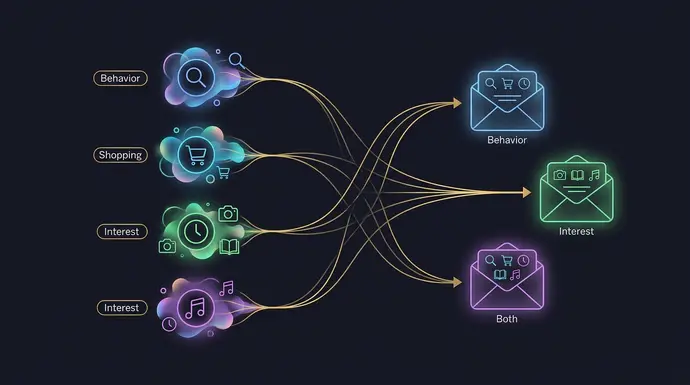
Why an email segmentation strategy matters
Most email problems are relevance problems in disguise. A campaign may look like it has a subject line issue, a design issue, or a timing issue. Sometimes it does. But often the deeper issue is that too many different people are being treated like one audience.
Think about a local service business. One subscriber may be comparing vendors and needs proof that the company can solve their problem. Another may already be a customer and only wants maintenance tips. A third may have gone quiet after asking for a quote. Sending all three people the same monthly update wastes attention.
A practical email segmentation strategy fixes that by giving each campaign a sharper purpose. You stop asking, "What should we send this week?" and start asking, "Who needs to hear from us, and what would help them take the next step?"
That shift matters because email lists decay when subscribers feel ignored or crowded. People unsubscribe when the message does not match their needs. Others stay subscribed but stop opening. The list may look healthy in size, while engagement quietly drops. Segmentation keeps the list closer to the real customer journey.
Start your email segmentation strategy with clean list data
Segmentation only works when your data is usable. You do not need a complex customer data platform to begin, but you do need a few reliable fields. Start with the information you already collect: signup source, purchase history, form answers, location, service interest, last engagement date, and customer status.
For many small businesses, signup source is the easiest first segment. Someone who joined after reading a guide may need education. Someone who came from a quote form may need proof and next steps. Someone who signed up during a promotion may care about deals, bundles, or seasonal reminders.
Engagement data is just as useful. Subscribers who opened or clicked within the past 30 to 90 days should not be treated the same as people who have been inactive for a year. Active subscribers can receive deeper offers, product education, and event invites. Inactive subscribers need a lighter re-engagement sequence or a clean opt-out path.
Purchase or inquiry history adds another layer. Customers who bought once may need onboarding, usage tips, or a follow-up offer. Repeat customers may respond better to loyalty content, early access, or referral prompts. Leads who asked about a service but never converted may need case studies, objections answered, or a limited-time consultation invite.
If your list is messy, fix that before building advanced segments. Standardize tags. Remove duplicate contacts. Make sure forms ask for only the information you will actually use. A field that never changes a future email is not worth asking for.
Email segmentation strategy examples that work
The best segments are tied to a clear business decision. Avoid creating twenty tiny groups just because your email platform can. Start with segments that change what you send, when you send it, or what call to action you use.
New subscribers. This group needs a welcome series. The first email should confirm what they signed up for and set expectations. The next few emails can explain your point of view, share useful resources, and point readers toward the most relevant offer. If your list grows from social channels, pair this with a clear path from social content to email. This guide on how to build an email list from social media shows how to connect those channels without relying only on rented attention.
High-intent leads. These are subscribers who clicked a pricing page, requested information, watched a demo, or visited service pages more than once. They should receive proof: case studies, comparison content, FAQs, testimonials, and direct invitations to book a call.
Recent customers. This segment needs reassurance and momentum. Send onboarding tips, common mistakes to avoid, reminders, and support resources. The first few weeks after a purchase are a good time to reduce buyer's remorse and help customers get a result.
Repeat customers. People who have purchased more than once have already shown trust. Send them early access, loyalty offers, referral reminders, and content that helps them get more value from what they already bought.
Inactive subscribers. Do not keep blasting people who have ignored emails for months. Send a simple re-engagement sequence. Ask if they still want to receive emails. Offer a preference update. If they stay inactive, suppress them. A smaller engaged list is usually better than a larger list that drags down deliverability.
Interest-based groups. If your business sells more than one service or product type, let subscribers tell you what they care about. A marketing agency, for example, might separate people interested in email marketing, social media, SEO, content strategy, or analytics. A retailer might segment by product category. A coach might segment by goal or experience level.
Build a simple email segmentation strategy workflow
Segmentation gets easier when you turn it into a repeatable workflow. The goal is not to build the most advanced system possible. The goal is to create a system your team can maintain.
Start with one question: what are the three to five subscriber groups that clearly need different emails? For most businesses, that answer will include new subscribers, active prospects, customers, repeat customers, and inactive subscribers. Those five groups are enough to improve most email programs.
Next, map one job for each group. New subscribers need orientation. Active prospects need confidence. Customers need a better experience. Repeat customers need reasons to return or refer. Inactive subscribers need a decision point.
Then write emails around the job, not around your internal calendar. A monthly newsletter can still exist, but it should not be the whole strategy. Add automated sequences where timing matters: welcome emails, post-purchase emails, abandoned inquiry follow-ups, and re-engagement campaigns.
Finally, measure each segment separately. If all campaign reporting is blended, you cannot see what is working. Track clicks, replies, conversions, unsubscribes, and spam complaints by segment. Open rates can still offer direction, but clicks and conversions are usually cleaner signals.
Common email segmentation strategy mistakes
The first mistake is over-segmentation. If each group is too small, you will spend too much time writing custom emails that barely reach anyone. Keep your starting segments broad enough to support regular campaigns.
The second mistake is using tags without a plan. Many accounts become tag graveyards: webinar-2024, download-old, lead-maybe, hot-lead-final, customer-copy, customer-new. Nobody trusts the data, so nobody uses it. Create a naming system and remove tags that no longer serve a purpose.
The third mistake is ignoring deliverability. Segmentation can improve relevance, but it will not fix a damaged sender reputation by itself. If your emails are landing in spam, clean inactive subscribers, authenticate your domain, avoid suspicious formatting, and review your sending frequency. This article on how to improve email deliverability is a good next read if inbox placement is already hurting performance.
The fourth mistake is making every email a sales pitch. Segmented emails still need value. A prospect might need a buyer's guide. A customer might need a how-to. An inactive subscriber might need a reason to update preferences instead of unsubscribe. Sales emails work better when the rest of the email program earns attention.
How to measure your email segmentation strategy
Good segmentation should make reporting clearer. Compare each segment against its own purpose. A welcome sequence should be judged by clicks, replies, and the number of subscribers who move into the next stage. A customer onboarding sequence should be judged by usage, repeat purchases, support reduction, or review requests. A re-engagement campaign should be judged by reactivated subscribers and clean removals.
Use benchmarks carefully. Mailchimp's all-user click rate of 2.62% is a helpful reference, but your own baseline matters more. If a segmented campaign moves a group from 1.5% clicks to 3%, that is meaningful even if another industry averages higher.
Watch unsubscribes and spam complaints closely. A segment with high clicks and high complaints may be too aggressive. A segment with low clicks but low complaints may need a better offer or clearer timing. The best segmentation systems improve both performance and trust.
Review segments every quarter. Remove groups that no longer change your messaging. Add new groups only when you can name the different email they should receive. The discipline is simple: if the segment does not change the send, it is probably not a real segment.
Put the strategy into action
You do not need to rebuild your entire email program at once. Pick one campaign and one audience group. For example, build a five-email welcome series for new subscribers, a three-email follow-up sequence for quote requests, or a re-engagement campaign for subscribers who have not clicked in six months.
Once that first segment is working, add the next one. Keep the system clean. Document your tags. Review performance monthly. Use your best-performing segments to guide future content, offers, and social posts.
An email segmentation strategy works because it respects attention. People are more likely to read when the message feels like it was meant for them. That does not require creepy personalization or endless automation. It requires useful groups, clean data, and emails that solve the problem each group actually has.