

A lead qualification checklist gives marketing and sales the same test for deciding who deserves a conversation now, who needs more context, and who is simply not a fit. The checklist below is built for practical use. It captures fit, intent, buying conditions, risks, and the next action without pretending that one score can predict a purchase.
You can copy the fields into a CRM, turn them into a form, or use the page as a call guide. Start with the essential questions, then add the deeper checks only when the size and complexity of the opportunity justify them.
Lead qualification checklist: the 12 essential checks
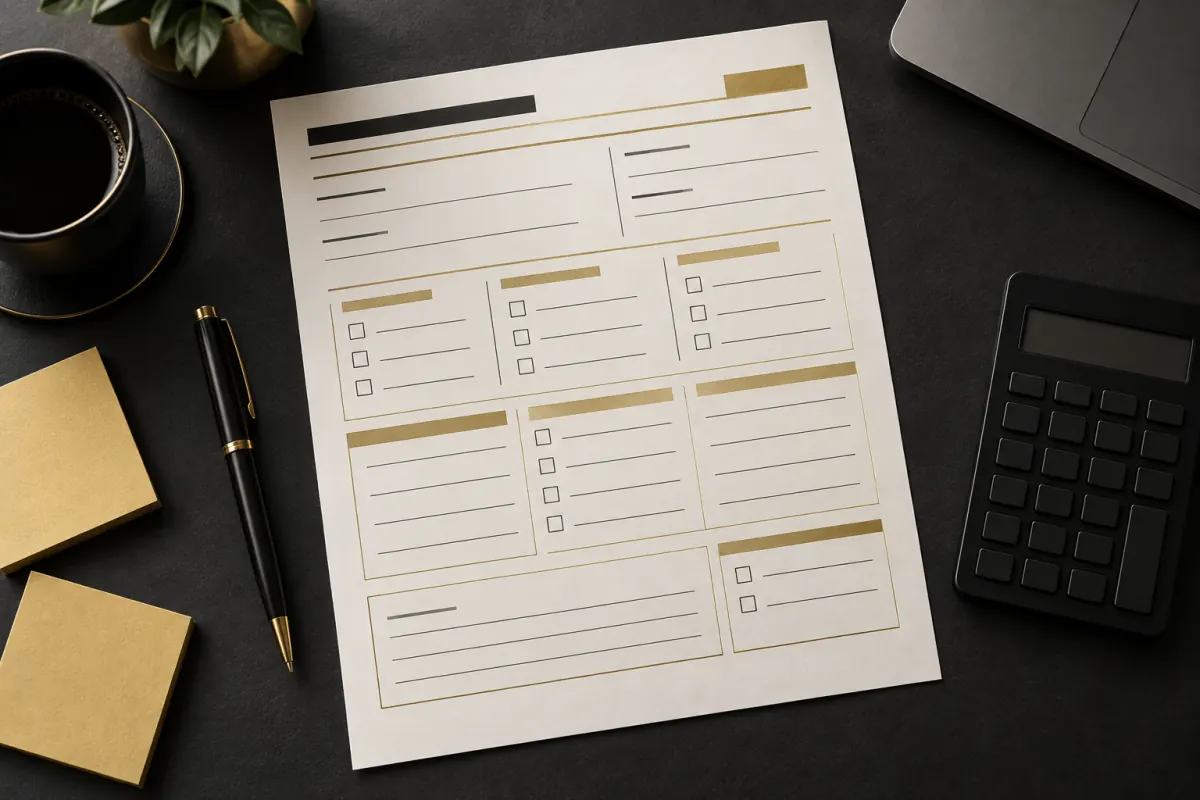
Complete these checks before moving a lead into an active sales stage. A blank answer is not a failed lead. It is an information gap that should create a specific follow-up task.
- Problem: What specific business problem is the lead trying to solve?
- Impact: What does the problem cost in time, revenue, risk, or missed opportunity?
- Desired outcome: What would a useful result look like in the lead's own words?
- Fit: Does the lead match the industries, company types, locations, and use cases you serve well?
- Current approach: How is the work handled today, and why is that approach no longer enough?
- Priority: Where does this initiative sit against other work competing for attention and money?
- Budget path: Is funding available, planned, or dependent on a business case?
- Buying group: Who uses the solution, evaluates it, approves it, and signs the agreement?
- Decision criteria: What business and technical requirements will determine the choice?
- Decision process: What steps, reviews, and dates stand between discovery and a decision?
- Timing: Is there a real deadline, and what created it?
- Next step: What action has both sides agreed to, who owns it, and when is it due?
These questions expand the familiar BANT model rather than discarding it. Salesforce defines BANT as budget, authority, need, and timeline. That is a fast starting point, but a larger purchase often needs more detail about stakeholders, decision rules, expected results, and internal support.
How to score a lead qualification checklist
Keep fit and readiness separate. A lead can match your ideal customer profile but have no active project. Another lead can be eager to buy but sit outside the work you can deliver profitably. Blending both dimensions into one unexplained total hides that distinction.
| Dimension | 0 points | 1 point | 2 points |
|---|---|---|---|
| Customer fit | Outside serviceable profile | Possible fit with limits | Matches a proven customer profile |
| Problem and impact | No defined problem | Problem named, impact unclear | Problem and impact confirmed |
| Priority and timing | No active initiative | Interest without a firm date | Active initiative with a reason for timing |
| Budget path | No plausible funding route | Funding must be built or approved | Funding range and approval path confirmed |
| Buying access | Unknown stakeholders | Some stakeholders identified | Roles, influence, and approval path mapped |
| Mutual next step | No agreed action | Loose follow-up | Named owner and date on both sides |
This produces a 0 to 12 working score. The scale is a starting template, not an industry benchmark. Test the threshold against your own opportunity creation, close rate, sales cycle, and customer retention data. A team might begin with 9 points for active sales follow-up, 5 to 8 for structured nurture, and 0 to 4 for disqualification or long-term education. Change those bands when real outcomes show a better cutoff.
Record hard disqualifiers separately. A compliance conflict, unsupported location, minimum contract mismatch, or missing service capability should not be offset by high engagement. It is possible to have an enthusiastic lead who is still the wrong customer.
★★★★★5-star client feedback
Turn your qualification checklist into a working growth system
Map the questions, routing rules, and follow-up content your team needs to move better-fit leads forward.
Lead qualification checklist questions for discovery
A checklist works best when the questions sound like a useful conversation. Reading a rigid script makes prospects guard their answers. Ask a broad question first, listen for specifics, then confirm what you heard.
Problem and impact questions
- What prompted you to look at this now?
- How are you handling the work today?
- Where does the current approach break down?
- Who feels the effect most directly?
- What happens if nothing changes this quarter?
- Which result would make this project worth doing?
Use the answers to write a short problem statement. For example: "The team spends 12 hours each week merging channel reports, so campaign decisions arrive after the budget has already moved." Send the statement back to the prospect for confirmation. That is stronger evidence than a generic CRM note such as "needs reporting help."
Budget and authority questions
- How do projects like this usually get funded?
- Is there an approved range, or do we need to build the case?
- Who owns the budget affected by this problem?
- Who else will evaluate the recommendation?
- Who can approve a final agreement?
- What information will each person need?
Authority is rarely a single job title. One person may run the evaluation, another may control the money, and a third may review security or legal terms. Mapping those roles prevents a friendly contact from being mistaken for the full buying process.
Timing and process questions
- Is there an event or cost creating the target date?
- What must happen before a decision can be made?
- Are other projects competing for the same people or budget?
- What would delay the work?
- When should we decide whether the next step is worthwhile?
A date without a cause is often a preference, not a deadline. Ask what changes on that date. A contract renewal, campaign launch, hiring plan, or board review creates a different level of urgency than "as soon as possible."
Choose BANT or MEDDIC based on deal complexity
BANT is useful for a quick first pass. It checks whether a prospect has a need, a possible budget, access to authority, and a plausible timeline. It can be enough for a straightforward purchase with a short buying path.
MEDDIC goes further. Salesforce lists its criteria as metrics, economic buyer, decision criteria, decision process, identify pain, and champion. That extra detail fits purchases with multiple stakeholders, a longer evaluation, or a meaningful implementation risk. Do not force every small opportunity through an enterprise framework. The process should create clarity, not paperwork.
| Use BANT when | Use MEDDIC-style checks when |
|---|---|
| The offer and pricing are straightforward | The solution affects several teams |
| One or two people make the decision | Financial, technical, and legal approvals differ |
| The buying cycle is short | The evaluation runs across several stages |
| The cost of a poor fit is limited | Implementation failure carries material cost or risk |

Separate lead scoring from lead qualification
Lead scoring sorts records using observable data. Qualification tests whether a real opportunity exists through research and conversation. They support each other, but they are not interchangeable.
HubSpot's lead scoring documentation separates fit scores from engagement scores and also supports combined scores. It describes positive and negative points, event limits, and score decay based on how long ago an action occurred. Those controls matter because ten low-value clicks should not automatically outweigh one strong fit signal, and activity from months ago should not carry the same weight forever.
Use scoring to decide who should be reviewed. Use the checklist to decide what should happen next. A high score can trigger a research task or outreach, but the sales stage should depend on confirmed evidence.
For teams building a measurement view, connect qualified-lead counts to a lead generation dashboard. Follow the same definitions through the funnel so marketing-qualified, sales-accepted, and active opportunity numbers do not change from one report to another.
Build the checklist into your CRM workflow
- Define each field. Write what counts as confirmed, partial, unknown, and disqualified.
- Require evidence. Add a short note, source, and last-confirmed date for each important answer.
- Assign ownership. Decide which fields marketing enriches and which sales confirms.
- Automate only clear rules. Route obvious matches and exclusions, but leave judgment-heavy cases for review.
- Create next-step options. Active follow-up, nurture, recycle, and disqualify should each have a defined owner and reason.
- Review outcomes monthly. Compare checklist answers with opportunity creation, wins, losses, cycle time, and retention.
Keep the required fields short enough that people complete them. Six well-defined fields with useful notes beat 30 fields filled with guesses. If a field never changes a decision, remove it. If the team repeatedly learns an important fact too late, add it.
The handoff should also connect to follow-up. Leads that are a good fit but not ready may need educational content, a reminder tied to a future date, or a focused sequence. These lead nurturing email examples can help match the message to the missing buying condition instead of sending a generic drip.
Common lead qualification mistakes
- Treating unknown as no. Missing information should create a task, not an automatic rejection.
- Letting activity outweigh fit. Frequent clicks do not fix a service, geography, or budget mismatch.
- Accepting a vague deadline. Ask what creates the date and what happens if it slips.
- Relying on one contact. Map users, evaluators, budget owners, blockers, and final approvers.
- Scoring without calibration. Review won and lost opportunities to see which answers actually predict a healthy customer relationship.
- Hiding disqualification reasons. Standard reason codes expose targeting, offer, and routing problems that anecdotal notes miss.
The goal is not to reject as many leads as possible. It is to spend the right effort on each one. A clear lead qualification checklist protects sales time, gives marketing better feedback, and gives prospects a more relevant next step.
★★★★★5-star client feedback
Build a lead qualification process your team will actually use
Get a practical plan for scoring, routing, nurture, and reporting around your real sales process.