
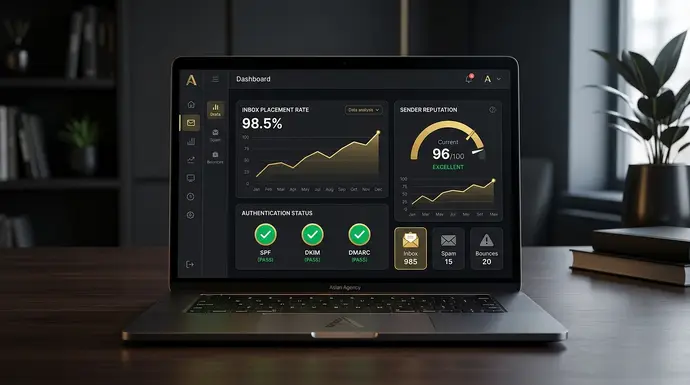
Email deliverability tips that matter in 2026
Email deliverability tips matter more than ever in 2026 because getting a message accepted by a server is not the same as landing in the inbox. If your emails miss the primary inbox, your list size, offers, and creative work lose value fast. The good news is that deliverability usually comes down to a few controllable factors: authentication, list quality, sending consistency, complaint rate, and subscriber engagement.
For small businesses, service providers, and growing teams, the smartest approach is to treat deliverability like an ongoing operating system, not a one-time technical setup. Google’s sender guidelines require all senders to use SPF or DKIM, valid DNS, and TLS, while bulk senders face tighter expectations around authentication and unsubscribe experience. Gmail has also said enforcement on non-compliant traffic is increasing, so weak setup and sloppy list habits are harder to get away with now.
That is why the most useful email deliverability tips are the ones that improve trust with mailbox providers over time. Below, I break down the practical steps that actually move the needle, along with the benchmarks worth watching.
Start with authentication before changing anything else
If you send marketing or lifecycle emails without strong authentication, you are building on weak ground. SPF, DKIM, and DMARC help mailbox providers verify that your messages are legitimate and tied to your domain. Google’s sender documentation says all senders to personal Gmail accounts need SPF or DKIM, and Google recommends full DMARC alignment with both SPF and DKIM for reliable authentication.
In plain terms, your sending domain, visible From address, and signing setup need to make sense together. If your email platform is signing mail from one domain while your visible sender uses another and your DNS records are incomplete, you create doubt. Doubt hurts inbox placement.
Here is the practical order of operations:
- Publish and verify your SPF record so authorized senders are clearly listed.
- Enable DKIM inside your email platform and confirm signatures are passing.
- Add a DMARC record and review reports so you can catch alignment failures early.
- Make sure your forwarding and reverse DNS records are valid.
- Use TLS for message transport.
Many businesses skip DMARC because it feels technical, but that is a mistake. DMARC gives you visibility into spoofing issues and alignment problems that quietly chip away at deliverability. If your team sends from multiple tools, this matters even more.
For a broader measurement framework, read how to measure social media ROI. The same basic rule applies here: if you track the right signals, you can improve them.
Email deliverability tips for list hygiene and bounce control
One of the fastest ways to hurt deliverability is sending to old, cold, or low-quality lists. Twilio SendGrid notes that poor list hygiene is a leading cause of deliverability failures because bad addresses, spam traps, and stale contacts damage sender reputation. Bigger lists are not always better lists.
A clean list usually beats a bloated one. If people have not opened or clicked in months, or if the addresses were collected without strong intent, you may be paying to send messages that lower inbox trust.
Use these habits to keep your list healthy:
- Remove hard bounces immediately.
- Suppress invalid or malformed addresses before future sends.
- Create a sunset policy for subscribers who stay inactive over a defined period.
- Avoid bought, scraped, or inherited lists.
- Use confirmed opt-in when lead quality matters more than raw volume.
Postmark’s deliverability guidance says bounce rates should stay well under 5 percent, and complaint rates should remain below 0.10 percent. Those are useful guardrails. If either number drifts up, stop looking only at subject lines and creative. The list itself may be the real problem.
★★★★★5-star client feedback
Turn your email Deliverability Tips into a growth plan.
Tell us what you are trying to achieve with email marketing. We will turn the ideas in this guide into a practical next-step plan.
Protect sender reputation by controlling complaints and expectations
Mailbox providers do not only look at whether your email was technically valid. They also look at how recipients respond. High spam complaints, low engagement, sudden volume spikes, and inconsistent sending patterns all send negative signals.
This is where a lot of businesses hurt themselves. They send rarely for months, then blast the entire list during a promotion. Or they collect subscribers through one promise and email them about something else. Or they make unsubscribing hard, which raises complaint risk.
If you want better inbox placement, make the subscriber experience predictable:
- Set clear expectations at signup about email frequency and topic.
- Send on a steady cadence instead of random bursts.
- Segment by interest, lifecycle stage, or engagement level.
- Make unsubscribing simple and visible.
- Reduce sends to people who consistently ignore your emails.
Google’s FAQ for bulk senders still emphasizes authentication, unwanted email prevention, and easy unsubscribe. That lines up with what most platforms have seen for years: inbox placement improves when your list expects your messages and interacts with them.
If your business is refining audience segments, how to create a brand voice for your business can help align messaging with the people you actually want to reach.
Email deliverability tips for engagement and send strategy
Good deliverability is partly earned through positive engagement. Mailchimp points out that sender reputation is influenced by engagement rates, complaint rates, bounce rates, and sending consistency. Better deliverability is tied to better email strategy, not just technical compliance.
That means the content and targeting of your campaigns still matter. If subscribers rarely open, never click, or mark messages as spam, mailbox providers start reading those patterns as a trust problem.
To improve engagement without trying to game the system:
- Write subject lines that match the email content instead of overpromising.
- Segment offers so different subscribers are not all getting the same message.
- Prioritize useful, specific emails over generic batch sends.
- Test frequency by segment instead of applying one cadence to everyone.
- Re-engage inactive subscribers before removing them.
It also helps to warm up new domains and major sending changes gradually. If you are launching a new newsletter, moving to a new ESP, or switching sending domains, do not jump from zero to high volume overnight. Gradual increases help mailbox providers see stable behavior rather than suspicious spikes.
Monitor the metrics that actually predict inbox placement
Many teams look at open rate first, but open rate alone will not tell you whether your deliverability foundation is healthy. A better operating dashboard includes:
- Hard bounce rate
- Spam complaint rate
- Unsubscribe rate
- Inbox placement rate when available
- Domain authentication pass rates
- Engagement by segment and source
Google Postmaster Tools can help Gmail senders monitor reputation and compliance status. DMARC reports help surface alignment issues. Your ESP should also show bounce categories, complaint sources, and engagement decay. Review these together, not in isolation.
If complaint rate is rising, ask whether your offer, targeting, or signup source changed. If bounce rate climbs, review list capture quality and suppression logic. If opens fall while complaints rise, your frequency or message fit may be off.
Deliverability problems are usually systems problems. The fix is rarely one magic tactic. It is a stack of smaller improvements that lowers risk and raises trust.
Common mistakes that quietly damage email deliverability
Some deliverability problems are obvious, like missing DNS records. Others are quieter and more common:
- Using one domain for the From address and another for the actual sending setup without proper alignment
- Continuing to email inactive subscribers for too long
- Uploading old CRM lists into a new ESP and sending immediately
- Changing frequency dramatically without warning subscribers
- Hiding the unsubscribe link or making the process frustrating
- Using misleading subject lines that create quick complaints
These mistakes usually happen when teams focus on short-term campaign output instead of long-term sender health. The inbox is earned through consistency. If you keep proving that your messages are expected, authenticated, and useful, deliverability tends to improve over time.
A simple 30-day plan to improve deliverability
If you want to apply these email deliverability tips without overcomplicating the process, use this 30-day framework:
- Week 1: Audit SPF, DKIM, DMARC, DNS, and TLS. Fix misalignment and verify every sender.
- Week 2: Clean the list, remove hard bounces, and define inactivity rules.
- Week 3: Review signup sources, welcome flow expectations, and unsubscribe experience.
- Week 4: Segment by engagement, reduce sends to cold contacts, and monitor complaints and bounce trends after each campaign.
This process is not flashy, but it works because it addresses the signals mailbox providers actually use. Better deliverability comes from technical trust plus subscriber trust.
★★★★★5-star client feedback
Ready to put your email Deliverability Tips into action?
Bring us your goals, current setup, and biggest constraint. We will map the clearest way to apply email marketing to your business.
Final takeaway
The best email deliverability tips in 2026 are not gimmicks. Authenticate your domain correctly. Keep your list clean. Protect complaint rate. Send consistently. Segment based on real behavior. Monitor the signals that affect reputation before small issues become bigger ones.
If your emails are landing in spam or getting weaker results than they should, start with the fundamentals above. Most businesses do not need tricks. They need a tighter system.